
Tourism is a growing industry that is expanding human presence towards the furthest reaches of the globe. As I was writing an article discussing how to balance tourism and conservation for The Oxford Scientist, I stumbled across a very interesting article…
The luxury of travelling for leisure (i.e. tourism) often makes nature pay a price. There is mounting research to suggest that tourism and overcrowding can harm ecosystems. During the COVID-19 pandemic, when the world ground to a halt, the phrase ‘nature is healing’ became popularised. Though the international spread of a deadly virus is objectively bad, it presented scientists with an unconventional opportunity to quantify how human presence affects the environment. A large majority found that nature was indeed healing. Yet I came across a paper called “COVID-19 lockdown reveals tourists as seabird guardians”.
Common murres (Uria aalge), also known as common guillemots, look like flying penguins (see below). These seabirds breed in colonies on cliffs along the Baltic Sea. Their breeding cycle is no joke. No nests are built. Eggs are laid directly onto bare rock faces. Chicks only have downy feathers after hatching and cannot fly. However, before their flight feathers develop, they have to make their way to the ocean with one big leap of faith (as seen in this video).
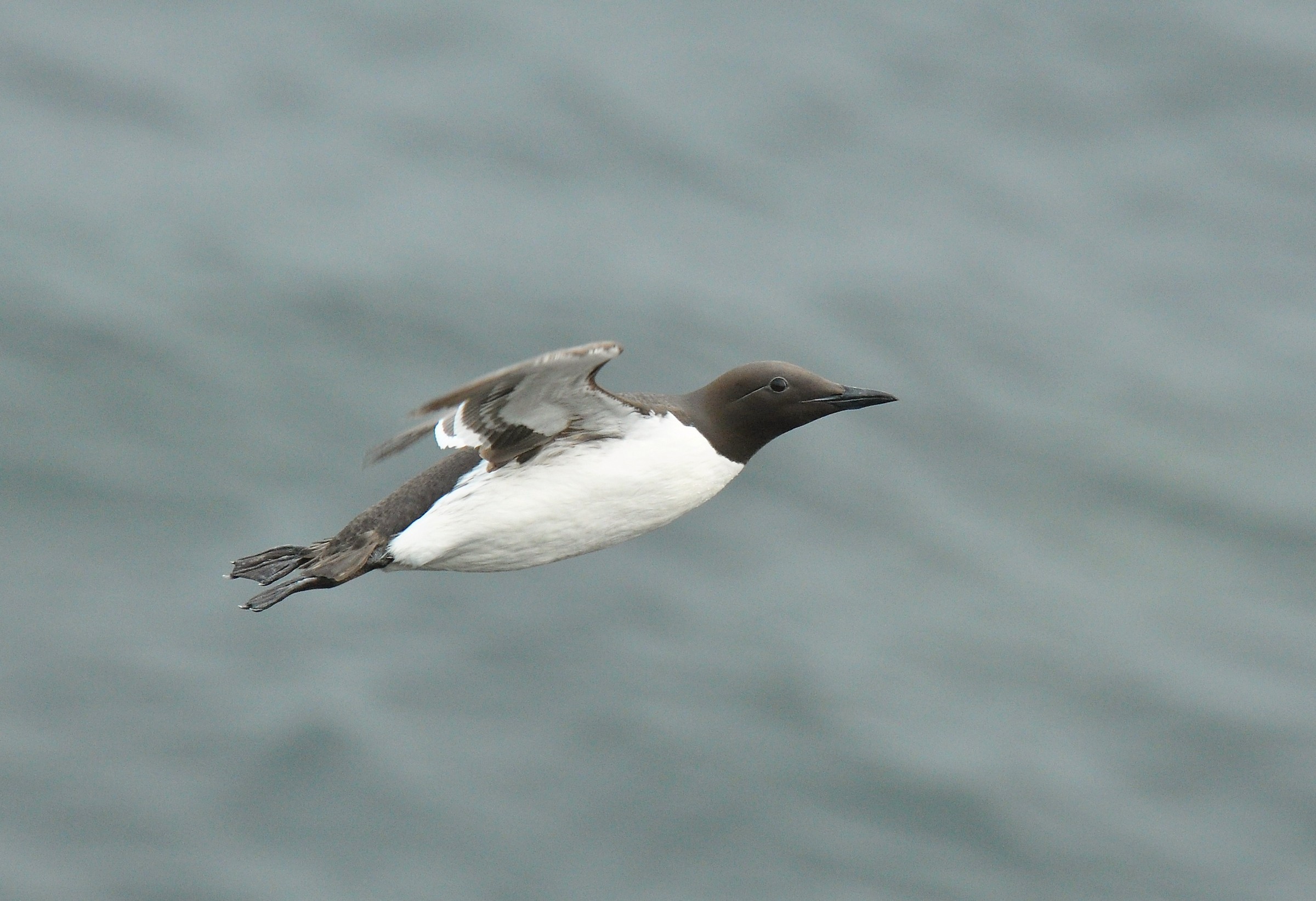
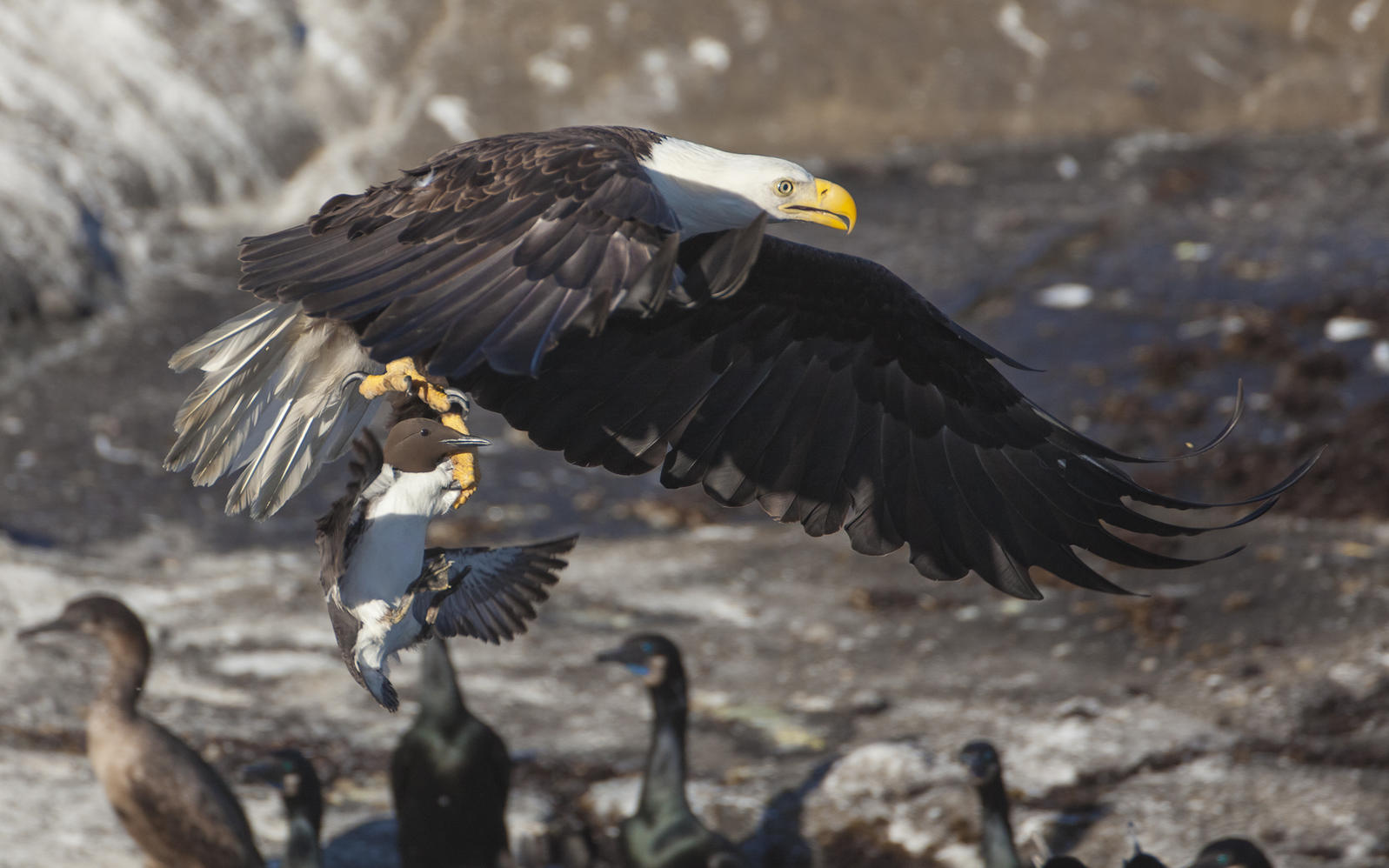
The common murre population of the Stora Karlsö island is the largest and most commonly visited colony in the Baltic Sea. Since 1880, these birds on Stora Karlsö were under protection from egg hunting and egg collection. The population has since been recovering, but is nonetheless still subjected to natural forces of predation by various predators such as sea eagles (genus: Haliaeetus) (see below). Sometimes even the mere presence of sea eagles around bird colonies can result in population declines.
Jonas Hentati-Sundberg and colleagues analysed the 24-hour CCTV footage of 40 common murre breeding pairs on Stora Karlsö island, and cross-referenced them to on the ground observations of disturbances that caused the birds to abandon their ledge. Hentati-Sundberg et al. also recorded data on phenology (breeding timings) and the number of eggs laid per pair. This was done for the breeding seasons of 2019 and 2020, before and after lockdown restrictions were imposed. The researchers also mined data from citizen science repositories to collect data on sea eagle observations prior to the pandemic.
There was a 92% decrease in human presence in the study site. Sea eagle presence increased from an average of two sighting per month, across 2010 to 2019, to an average of 19 in 2020. Hentati-Sundberg et al. found that the total disturbance time for common murres increased from 72 minutes per day to 602 minutes per day. Not only were the birds being forced away from their cliffs by sea eagles for longer, but the number of disturbances also increased from 2019 to 2020, from an average of 5 times a day to 15 times a day. The increase in frequency and duration at which parents would temporarily abandon their eggs resulted in greater egg predation rates by herring gulls (Larus argentatus) and hooded crows (Corvus cornix).
As a result of increased egg predation, indirectly initiated by sea eagles, the number of breeding attempts between pairs and the hatching success of eggs decreased in 2020, compared to averages in reproductive outputs from the 2010-2019 reference period. Pairs also laid eggs ten days later than before. One subcolony of common murres had no successful breeding attempts in 2020. It was the worst breeding season on record for the common murres of Stora Karlsö.
So tourists may now be inextricable players in the population regulation of these sea birds. The sensitivity of sea eagles to human presence is an interesting example of how tourism is deeply embedded within complex interactions of ‘social-ecological’ systems. It would be interesting for a follow up study to investigate how the return of tourists to the coasts impacts common murre breeding, and whether we see a reversal of the disturbance patterns found by Hentati-Sundberg et al. Though this paper did not make it into my final draft for The Oxford Scientist, I still wanted to write about it in this journal. I feel it provides, in the form of an opportunistic study, an important reminder that humans are not separate entities from natural processes.
Read the paper here: COVID-19 lockdown reveals tourists as seabird guardians – ScienceDirect
 TayBi’s Journals