[Warning : spoilers!]
I swear by this movie to every person who asks me for recommendations. I took two sets of friends to see this film with me on two separate occasions, and though everyone appreciated the film, I was the only one left bawling my eyes out as the credits rolled in. After relentlessly playing back the conversations I had with my friends after the film, it seemed to me they discussed the plot like gossip — the drama unfolded in front of them, separate to them. But I felt like I was engulfed by this film. It enveloped me with all its timid love and understated gut punches. Why was I taking this film so personally?
The answer is simple: Past Lives builds suspense and drip-feeds you hope. The plot takes the audience through the intertwined chapters of the two main character’s (Nora and Hae Sung’s) lives: childhood, online reunion, and in person reunion. These events unfold in front of the viewer in 105 minutes — yet the plot between the characters develops over 24 years. These two childhood sweethearts had decades pass between them, and yet to have that instant gratification of a long-overdue skype call within the span of 5 minutes is addictive.
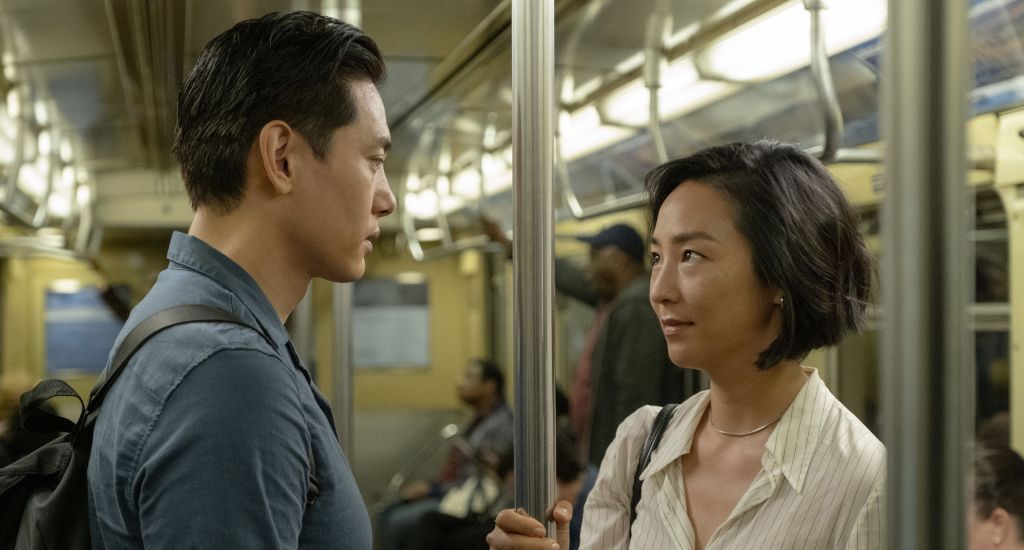
On top of that, film is so easy to project yourself onto. It’s sprinkled with silent gazes and unspoken feelings. All that’s left is for you to fill in the gaps. A pick n mix of emotions underlies every prolonged period of eye contact. The plot is an ode to the director, Celine Song’s personal experiences — perhaps this is why the story feels so raw and sincere. Potentially, this was never the intention of Song, but every chance I got I was drumming up ways I wanted things to play out in every hushed moment, in hopes it would seep into the movie and manifest a force that would finally pull those two together. Shabier Kirchner (the cinematographer) weaves a fabric of reality with his naturalist way of shooting scenes. The unconscious is tapped into through his emotive closeups. These intimate scenes made the characters so real for me.
Though, the film does not solely hinge on its powerful silences. Song began her career as a playwright — Past Lives is her directorial debut. The intentionality of each piece of dialogue is Song’s playwrighting peaking through in her screenwriting. When Nora and Hae Sung are on a boat sailing past the statue of liberty, Hae Sung says “she’s turned her back on us” as they sailed behind her. I ached at this; Lady Liberty is a symbol of freedom amongst other things. Both Hae Sung and Nora already had roots elsewhere and ripping them out would be nonsensical — the sunken costs would be irreparable. They didn’t have the freedom to leap anymore…
Probably the most masterful aspect of this movie’s craftmanship is the durability of its hard-hitting finesse. I watched Past Lives during and after a turbulent relationship, and was brought to tears at the exact same moments but for different reasons. Initially I cried because the two people seemed like they were meant to be together, with their rare yet intense entanglements. I was crying the next time because I now understood that some people come into your life impermanently, yet change it forever. The concept of in-yun was especially transformative during my post-breakup watch. It has no direct translation from Korean, but vaguely in-yun refers to predestined relationships, and connections throughout one’s life. It has ties to Buddhist concepts of reincarnation. In the movie, Nora explains that when two people get married, it signifies that those two people have reached 8,000 layers of in-yun, implying they have encountered each other over the course of 8,000 lives. The idea that strong relationships in a current life are amalgamations of brief interactions in past lives was very reassuring. Every interaction matters and builds towards something greater — none is insignificant. Past Lives gave me consolation. Maybe the perpetuation of my love will spill into the next life, and grow into something more for the reincarnations of our souls.
To say the least, it’s all so delicate. To the point where you can’t breathe too hard or it’ll rupture the film’s delicate reality. It makes you vulnerable and wanting, and leaves you just so. You want Hae Sung and Nora to operate on impulse but the characters never break their composure — not until the final scene. Their agency to explore feels strangled. Nora walks Hae Sung to his Uber pickup location, and they wait there in aching tension. They face each other. Then the Uber arrives. There’s a pinch of hope left when Hae Sung asks Nora if they are currently the past lives of something beautiful in the future. Neither of them gives a sure answer.
Then, the final scene is a 2 minute long soul-destroying, heartbreaking, wordless ending. It broke me. After they say goodbye, Nora walks back to her home. On the way she maintains her composure, then as she nears her husband on the steps to their apartment, she breaks down into his embrace. They step in sync back into her New York apartment. It then cuts to Hae Sung — the camera lingering on his wistful contemplative expression before it allows him to pass out of frame. In an interview with Elle, Celine Song divulges that the movie is shaped around the complexities of a goodbye. As kids, Nora and Hae Sung did not hold any weight to their parting. But as the two part again in adulthood, they were honouring the goodbye they were “owed as children.” Song makes this comparison by cutting between grown Hae Sung and Nora on the New York sidewalk, and the two as kids in Korea. Their last goodbye feels more final and grounded.
I hardly ever rewatch films. However Past Lives is the kind of film that I would want to revisit as I traverse through versions of myself. The film evolves with you. It’s poignant. And I love sitting in it.
Featured image is a still from Past Lives, taken from CNN, credits to Jon Pack.
 TayBi’s Journals